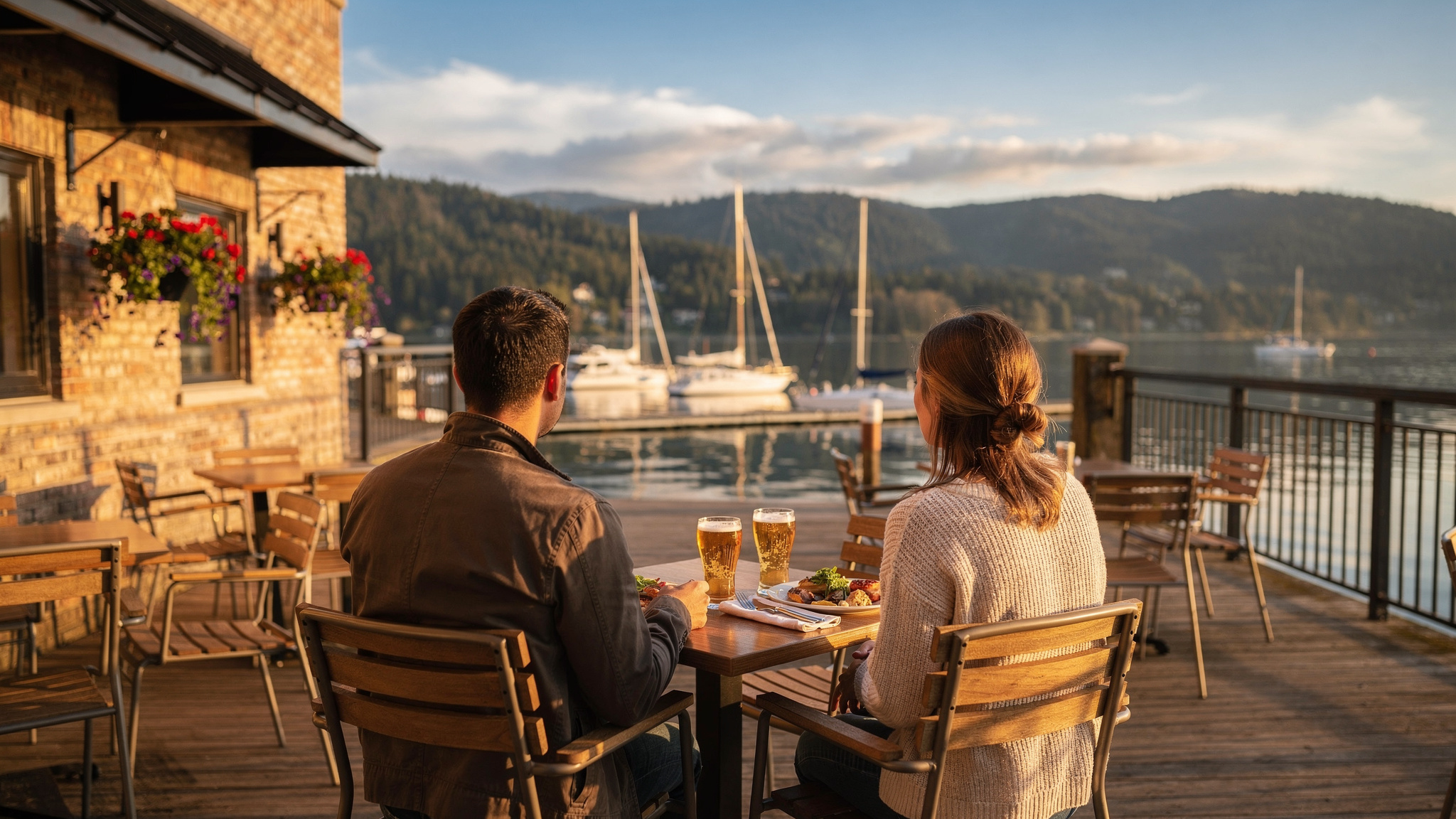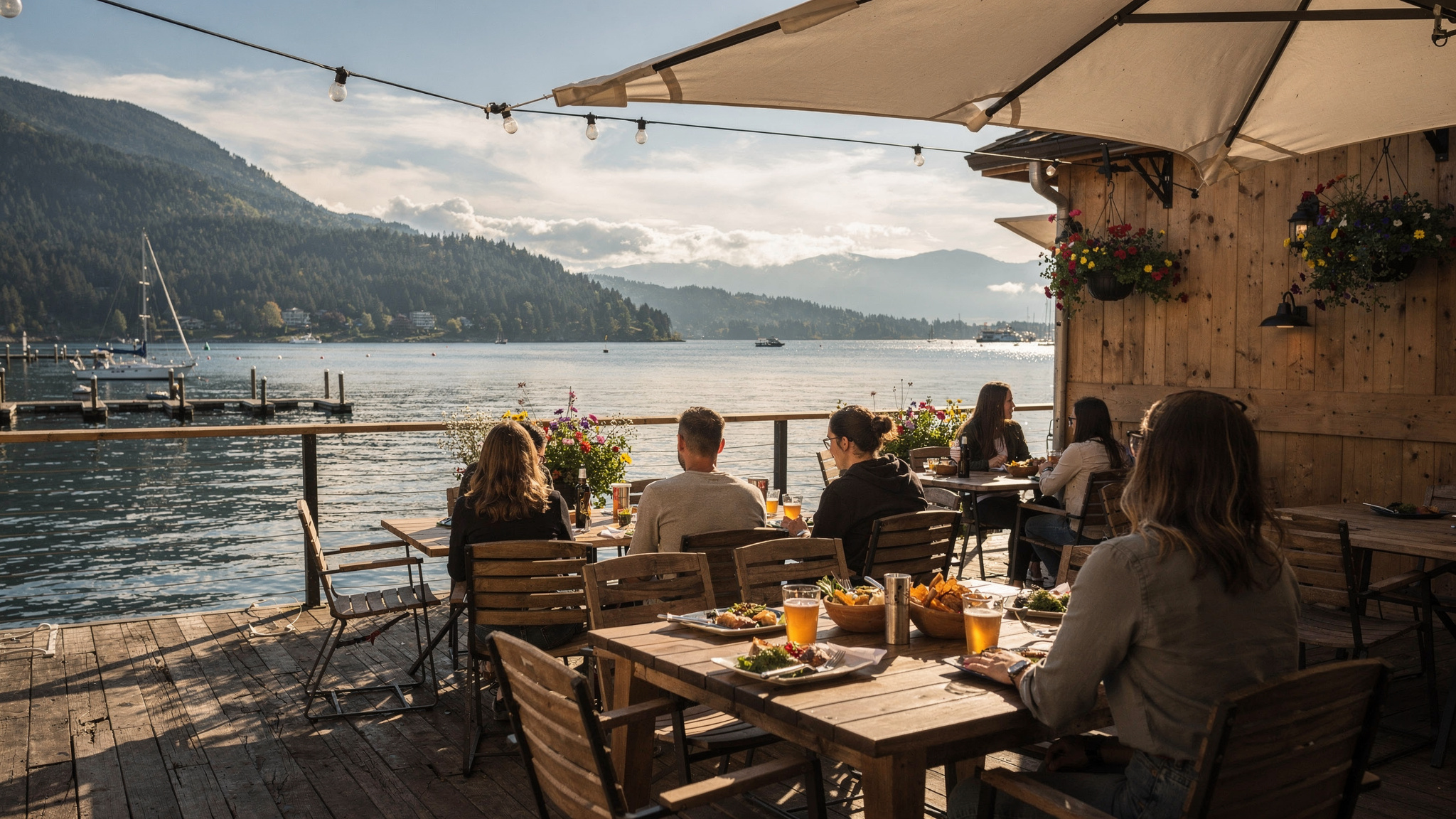

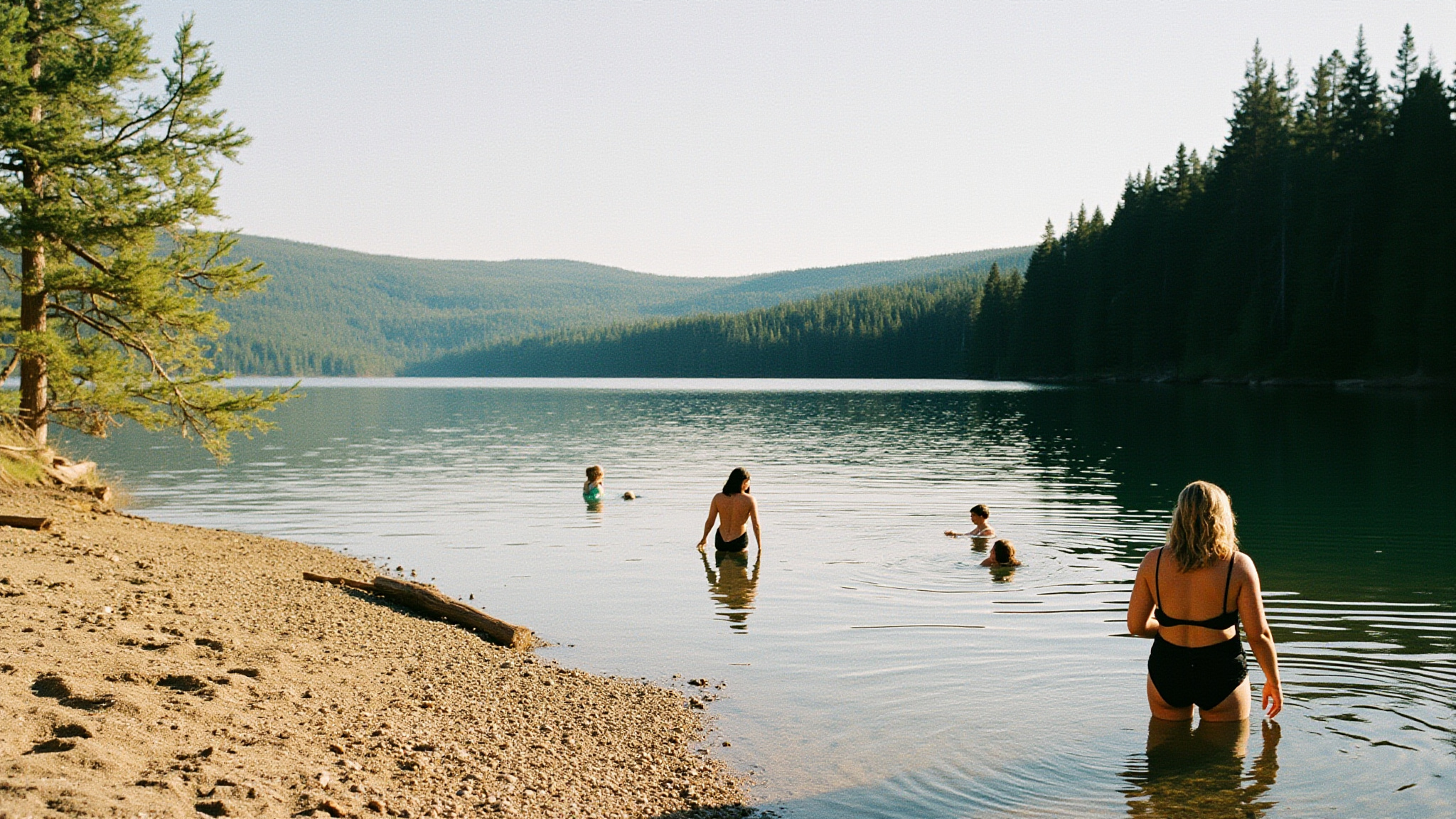
Belcarra Regional Park encompasses roughly 1,200 hectares of second-growth coastal forest, shoreline, and lake on the eastern edge of Burrard Inlet, administered by Metro Vancouver Regional Parks. The park straddles the communities of Belcarra and Anmore, northeast of Port Moody, and contains some of the most accessible natural swimming, paddling, and hiking in the Lower Mainland. The centrepiece is Sasamat Lake, reliably cited as the warmest lake in Metro Vancouver and home to White Pine Beach, one of the region’s most popular freshwater swimming destinations.
Belcarra Regional Park does not have transit access; a car is required to reach the park’s main areas. This has kept the park from reaching the overcrowding levels that some more accessible Metro Vancouver parks face, though popular summer weekends at White Pine Beach can still be busy. The lack of transit access also means the park draws a more intentional visitor: people who have made a specific decision to come to Belcarra rather than ending up there by accident. The result is a park atmosphere that feels a degree more deliberate and peaceful than comparable waterfront sites closer to the city core.
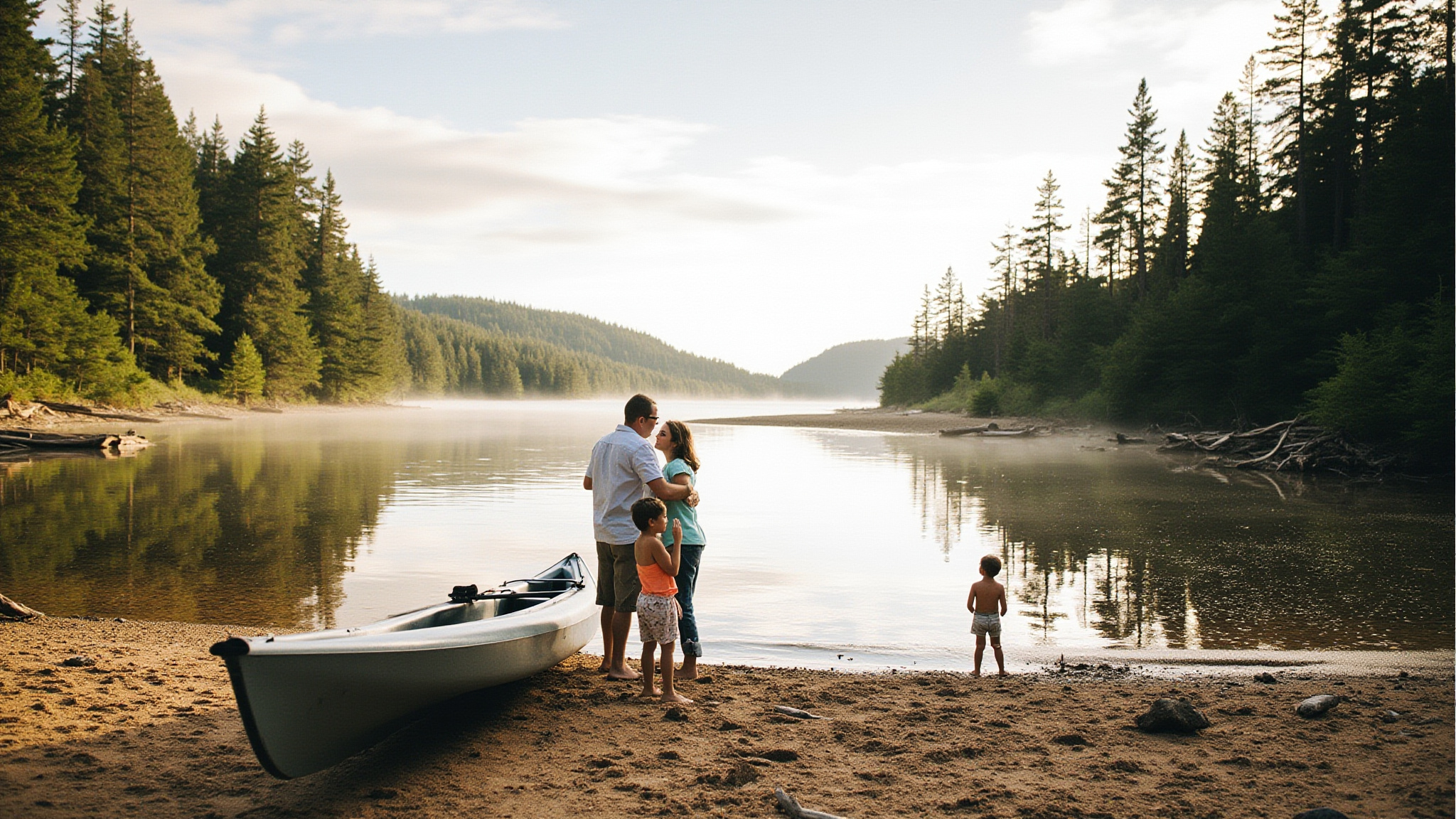
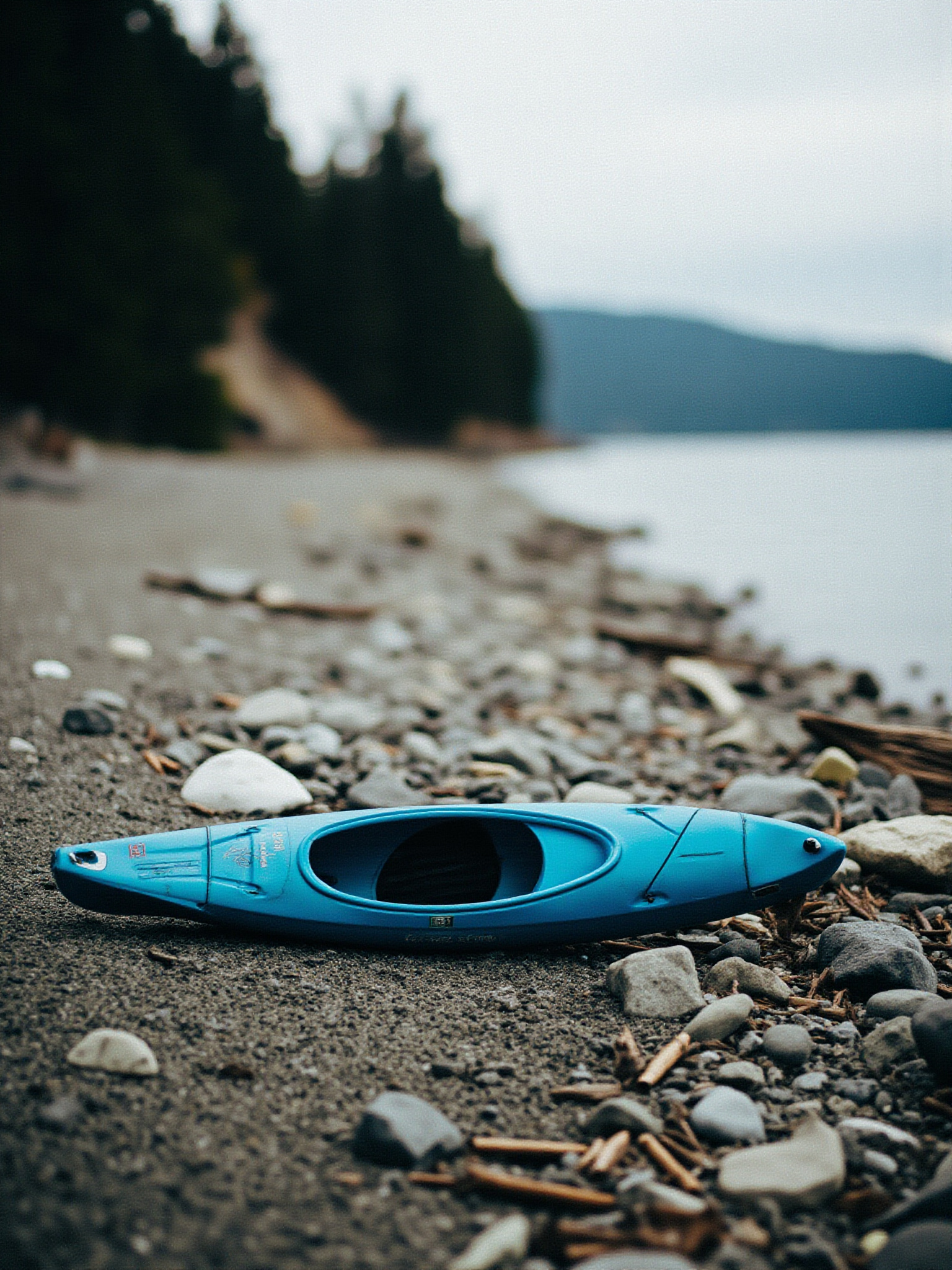
Sasamat Lake and White Pine Beach
Sasamat Lake sits in a bowl of second-growth forest in the northern section of Belcarra Regional Park, and its warm water temperatures are the result of its relatively shallow depth and southern exposure. By July and into August, surface temperatures at Sasamat routinely reach 22 to 24 degrees Celsius, which is warm enough for genuine swimming rather than the bracing cold immersion that characterises most freshwater swimming in the Lower Mainland. This warmth, combined with clean water and the surrounding forest, makes Sasamat the closest thing to a genuinely pleasant natural swimming experience within a reasonable drive of Vancouver.
White Pine Beach is the main public access point to Sasamat Lake. The beach is sandy and slopes gently into the water, making it suitable for children and confident swimmers alike. Metro Vancouver has maintained the beach infrastructure well: there are change rooms, washrooms, picnic tables, lifeguards during the summer season, and a small concession. The beach can get crowded on hot summer weekends, particularly on Saturdays in July and August when parking at the beach lot fills before 11am.
The lake is ringed by trails that allow a full loop hike around the perimeter, a walk of roughly three kilometres. The trail passes through forest and offers periodic glimpses back down to the water. For visitors who want more than just the beach, the lake loop is a good way to see the park’s forest character while staying connected to the central amenity. Kayaks and canoes can be launched at Sasamat Lake, and the calm water makes it suitable for beginners.
Barnet Marine Park and the Inlet Shore
Barnet Marine Park occupies a section of Burrard Inlet shoreline at the southeastern corner of Belcarra Regional Park, accessible by a separate access road off Barnet Highway in Burnaby near the Port Moody boundary. The park has a beach on the inlet, picnic facilities, and access to the western end of the Shoreline Trail, which connects east through Port Moody’s waterfront to Rocky Point Park and beyond. The Barnet beach is a saltwater beach on Burrard Inlet rather than a lake beach, which gives it a different character from White Pine.
The inlet view from Barnet Marine Park looks westward toward the Burnaby Mountain slopes and the industrial waterfront of the inner harbour. On clear days the view extends to the North Shore mountains. The beach at Barnet is pebbled rather than sandy, which is typical for Burrard Inlet shores. It is better suited for walking, picnicking, and wildlife watching than for swimming, though hardy swimmers do use it.
Barnet Marine Park is also the starting or ending point for the Shoreline Trail’s eastern section. Hikers completing the full 10-kilometre Shoreline Trail often use Barnet as their endpoint, arranging a vehicle shuttle or returning on the trail to Rocky Point. The park has a small parking area and picnic shelter. It sees considerably less traffic than White Pine Beach, which makes it a better option for a quiet visit.
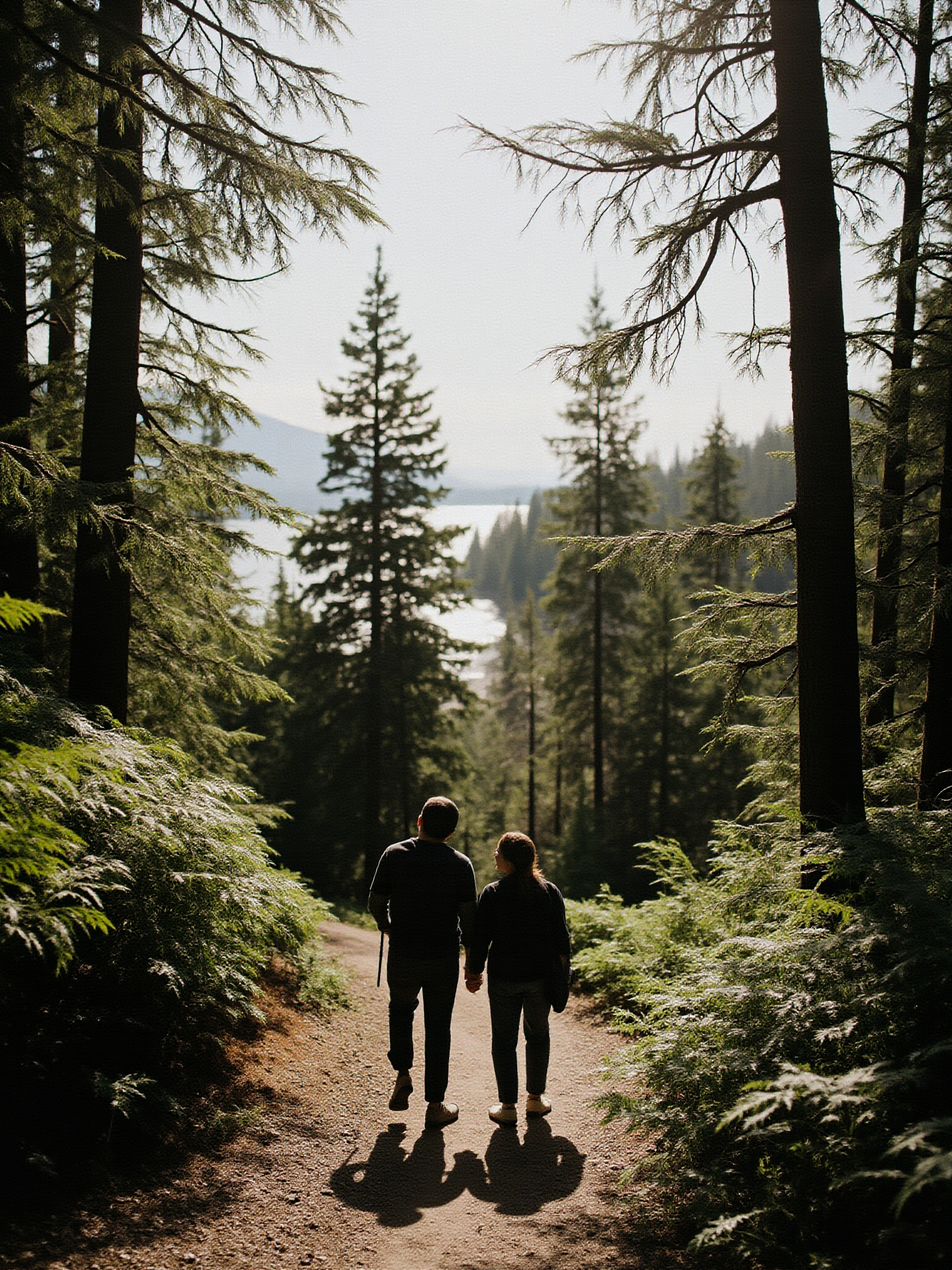
Hiking Trails Through Coastal Forest
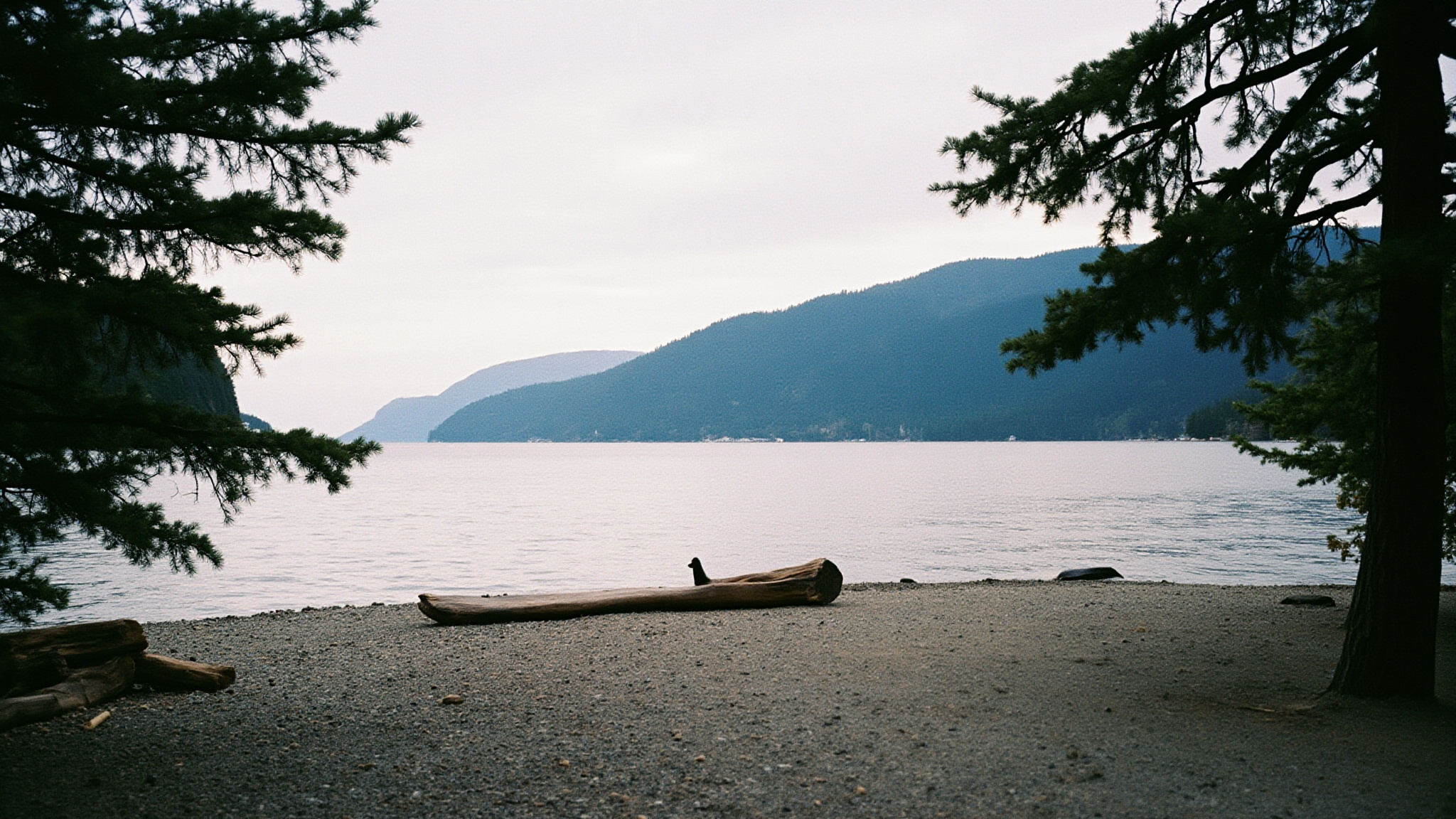
Belcarra Regional Park has an interconnected trail network of roughly 15 kilometres covering both the lake area and the inlet shoreline. The trails pass through predominantly second-growth Douglas fir forest, with some sections of older growth along the more remote ridgelines in the park’s interior. The forest floor here is typical BC coastal: sword ferns, salal, oxalis, and in spring a flush of trillium in sheltered spots. The forest canopy is dense enough to make the trails comfortable in light rain, which is a practical consideration given the Lower Mainland’s climate.
The Sasamat Uplands Trail is one of the better routes for seeing the park’s forest character away from the beach. It climbs from the lake area through mixed second-growth into terrain that has a more remote feel despite being within a few kilometres of the parking lot. The trail connects to viewpoints above the lake and, on clear days, gives partial views toward the inlet. It is less used than the beach trails and suited to people who want a quieter experience.
The Jug Island Beach Trail leads from the Belcarra picnic area to a small beach on the inlet, roughly three kilometres round trip, and is one of the more scenic short hikes in the park. The beach at Jug Island is a gravel and sand pocket accessed by a short descent through forest, and the view from the beach across the inlet toward Indian Arm is excellent. The route is suitable for most fitness levels and makes a good complement to a morning at Sasamat Lake.
Paddling, Views, and What Else to Do
Kayaking and canoeing are well-suited to the Belcarra Regional Park area. Sasamat Lake is the most protected option, with calm water and no motorised boats permitted. The lake’s warm temperature and manageable size make it ideal for beginner paddlers and those with children. Rentals are not available in the park itself; you need to bring your own craft or arrange a rental from an outfitter in Port Moody or Coquitlam.
For more experienced paddlers, the inlet waters accessible from Barnet Marine Park and from the Belcarra village boat launch open up Indian Arm, one of the most dramatic coastal fjord environments accessible from the Lower Mainland. Indian Arm extends roughly 24 kilometres north from Burrard Inlet through steep forested slopes, with no road access along most of its length. Day trips into Indian Arm from Belcarra are popular with sea kayakers, and the arm has several provincial marine parks with camping accessible only by water.
Belcarra village itself, reached via Bedwell Bay Road, has a picnic area and launch ramp with views across the inlet toward the mountains. The village is small and residential, but the picnic area at the end of the road is a good destination for families who want a quiet waterfront stop without the crowds of White Pine Beach. Wildlife in the Belcarra park area includes black bears, which are occasionally seen on the trails, as well as river otters, great blue herons, and in the inlet, harbour seals and porpoises.
Getting to Belcarra Regional Park
Belcarra Regional Park requires a car; there is no transit service to any of the park’s main access points. From Port Moody, the drive to White Pine Beach at Sasamat Lake takes about 15 minutes via Ioco Road and Bedwell Bay Road. From Vancouver, allow 30 to 40 minutes depending on traffic on the Trans-Canada Highway and the Lougheed Highway approach. GPS navigation to ‘White Pine Beach, Belcarra’ or ‘Sasamat Lake’ is reliable.
Parking at White Pine Beach fills quickly on summer weekend mornings. Metro Vancouver has implemented a parking reservation system at White Pine Beach during peak summer periods to manage crowding. Check the Metro Vancouver Regional Parks website before visiting in July or August to confirm whether reservations are required and available for your desired date.
Barnet Marine Park is accessed via a separate entrance off Barnet Highway near the Port Moody-Burnaby boundary. This section of the park is less known and parking here is typically available without difficulty. The Belcarra picnic area at the end of Bedwell Bay Road also has its own parking and is a good alternative if White Pine Beach is at capacity.
Tips for Visiting Belcarra Regional Park
Arrive at White Pine Beach before 10am on hot summer weekends. The parking lot fills by late morning and the beach gets genuinely crowded. Midweek visits in summer are much more relaxed, with ample parking and quieter beach conditions.
Bring your own food and water. The concession at White Pine Beach provides snacks and drinks seasonally but is not a full meal option. There are no restaurants inside the park. Picnic tables at the beach and at the Belcarra picnic area are first-come, first-served.
Check the Metro Vancouver Regional Parks website for current fire restrictions before visiting. Summer fire bans in the region affect what you can do at park picnic areas, and the rules change seasonally and sometimes week to week.
If you are combining Belcarra with Port Moody, the logical sequence is morning at White Pine Beach followed by lunch and afternoon at Rocky Point or Brewers Row. The drive back through Port Moody from Belcarra passes through the city centre and Rocky Point is directly on the route.
Questions Often Asked
Can you swim at Sasamat Lake?
Yes. Sasamat Lake at White Pine Beach is one of the best freshwater swimming spots in Metro Vancouver. The lake is warm by late July, with surface temperatures commonly reaching 22 to 24 degrees Celsius. Lifeguards are on duty during the summer season at White Pine Beach. The water quality at Sasamat is monitored by Metro Vancouver and is generally rated suitable for swimming.
Is there a fee to enter Belcarra Regional Park?
Entering and hiking the park trails is free. Parking at White Pine Beach may require a fee during peak summer periods; Metro Vancouver has moved toward paid parking at the most popular regional park sites. Check the Metro Vancouver Regional Parks website for current parking fees and reservation requirements before your visit.
Can you camp at Belcarra Regional Park?
Belcarra Regional Park does not have a drive-in campground. There are backcountry camping options in provincial parks accessible by boat along Indian Arm, including Granite Falls and Cascade Falls provincial marine parks. For car camping near Port Moody, Buntzen Lake Recreation Area in Anmore has limited camping and is the closest option.
How do you get to Belcarra from Port Moody?
A car is required. From Port Moody’s city centre, take Ioco Road north and east, then follow Bedwell Bay Road to the park’s main entrances. The drive to White Pine Beach takes about 15 minutes. There is no bus service to Belcarra Regional Park.