
A Brief History of Port Moody, BC
Port Moody’s history runs deeper than most people realise. The land sits on the traditional and unceded territories of the Kwikwetlem, Squamish, Tsleil-Waututh, and Musqueam peoples, who have fished the salmon, gathered clams, and traded along Burrard Inlet for thousands of years. When European settlers arrived in the 1860s, they found a place already rich with culture and stories.

The Tsleil-Waututh Nation, whose name means “People of the Inlet,” maintained a village site called Saymahmit where Port Moody now stands. The clam beds, medicinal plants, and access to Burrard Inlet made this an important meeting place. The Kwikwetlem fished salmon in the Coquitlam River waters, and the Squamish and Musqueam peoples maintained seasonal camps throughout the area.
You can still see this history along the Shoreline Trail, where you can find five carved house posts made by artists from the Tsleil-Waututh, Musqueam, Squamish, Kwikwetlem, and Katzie nations, still standing as a marker of that history. The Noons Creek Hatchery near Rocky Point Park hosts artist residencies and cultural events throughout the year.
The Railway That Made a City
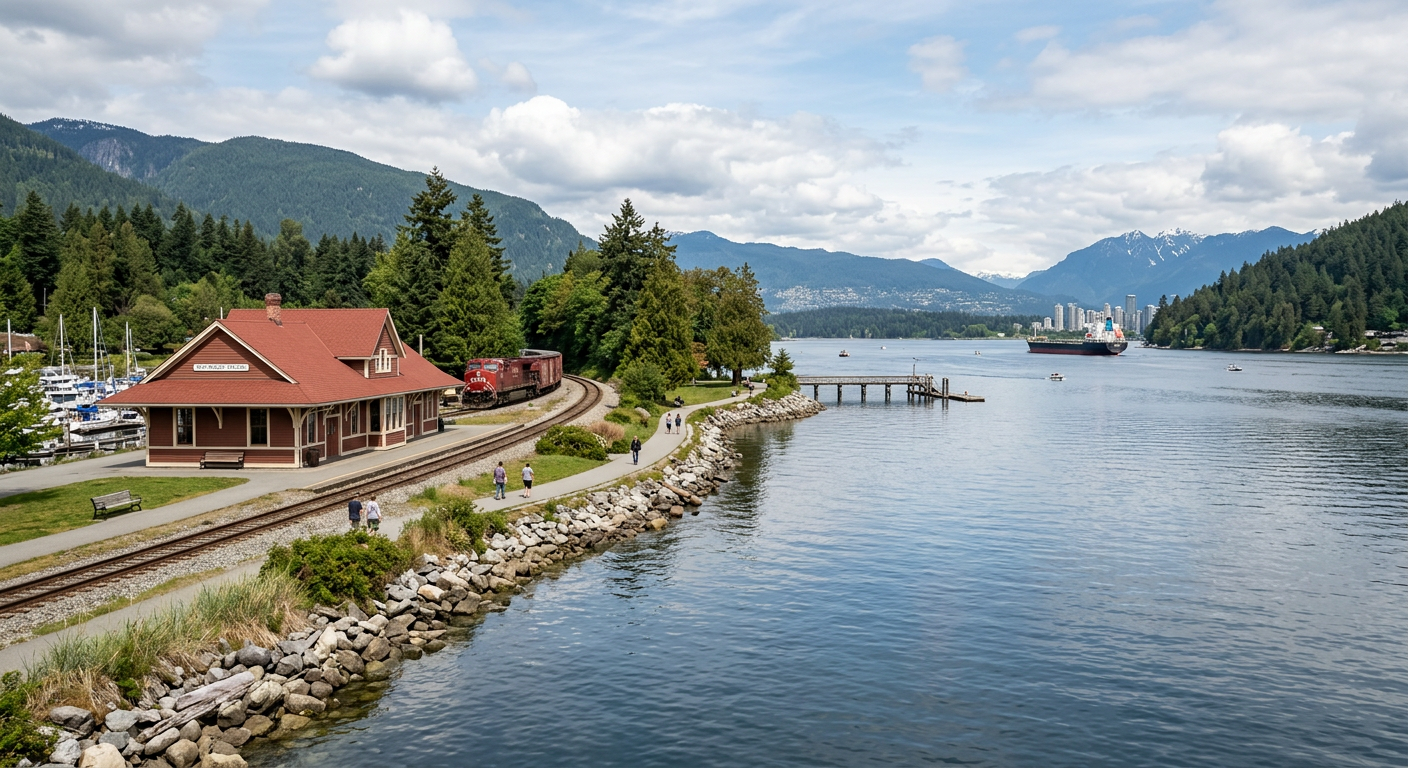
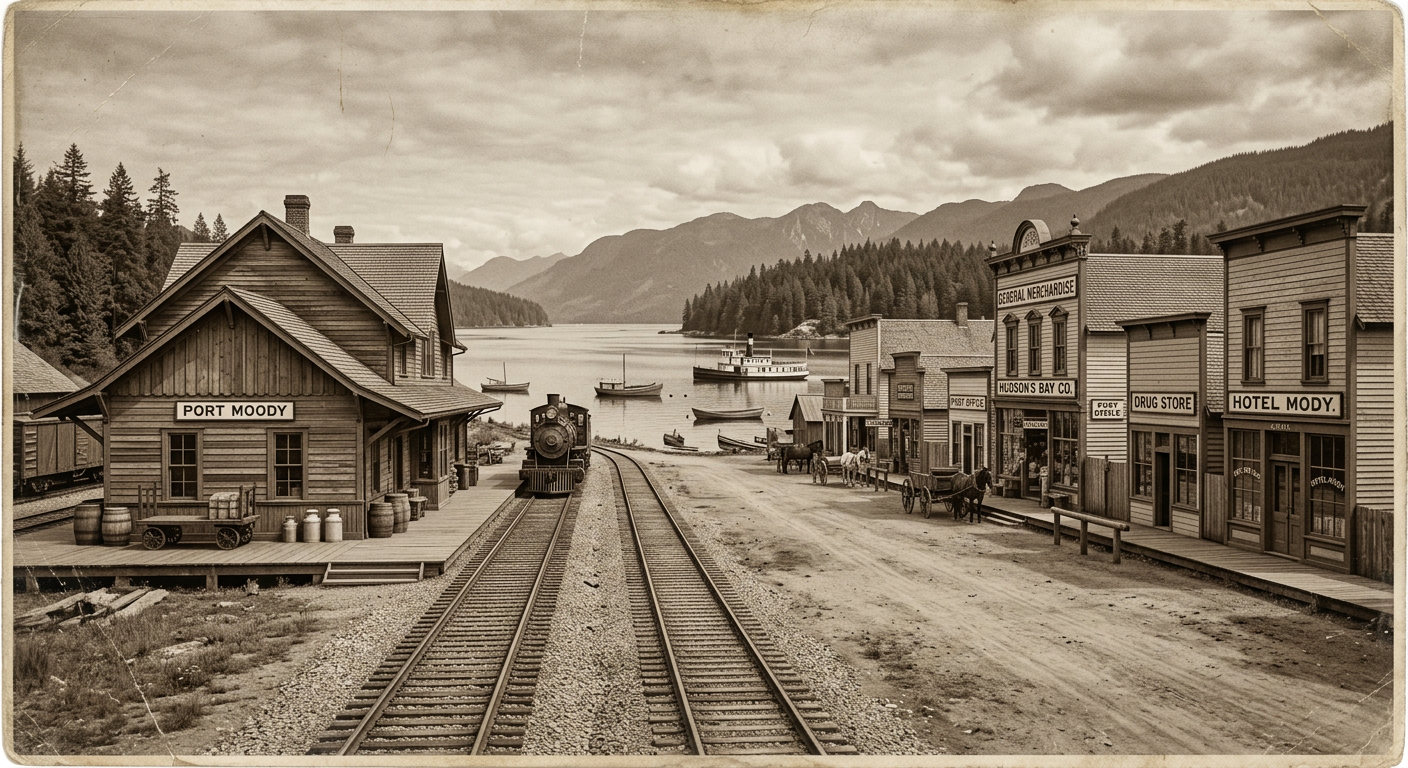
In 1879, the federal government named Port Moody the western terminus of the Canadian Pacific Railway. The announcement set off immediate land speculation, with lot prices jumping from $15 to $1,500 almost overnight. The first CPR station was built in 1882, and on July 4, 1886, the first transcontinental train rolled into Port Moody. For ten months, this small inlet town was the end of the line for all of Canada’s rail network.
The line extended fourteen miles to what is now Vancouver in 1887, and Port Moody’s brief moment as the rail endpoint ended. But the city did not disappear. The lumber industry took hold in the early 1900s, and the community grew steadily through the twentieth century. The second station, built in 1907 and 1908, still stands today on Murray Street as the Port Moody Station Museum.
The Port Moody Station Museum on Murray Street sits in the original 1908 CPR station. Inside you will find the restored 1921 sleeping car Venosta, photographs from the railway era, and exhibits covering everything from the fur trade to the lumber mills that built the city. Admission is by donation and it is a ten-minute walk from the Moody Centre SkyTrain station.
In 1945, the CPR moved the station building by cutting it in two, placing it on greased tracks, and pulling it with a locomotive to Queen Street. The Port Moody Heritage Society bought it in 1978 and opened it as a museum in 1983. You can walk through a restored 1920s sleeping car that once carried passengers across the country.
Heritage Sites You Can Visit
Port Moody keeps its history visible. Rocky Point Park has interpretive signs about the Tsleil-Waututh connection to the inlet. The Shoreline Trail runs ten kilometres through forest and marshland, passing the five house posts and linking to Noons Creek Hatchery. Golden Spike Days takes place at Rocky Point Park over Canada Day weekend with races on replica handcars, live music, and community events. The festival has been running since 1979.
From Lumber Town to City of the Arts
Port Moody grew through the twentieth century from a lumber and milling town into the community you see today. The city now has over 35,000 residents and keeps developing along the inlet and around the SkyTrain stations. But the heritage stays close. The brewery district on Murray Street grew from the same industrial corridor where mills once stood. Rocky Point Park, where workers once loaded lumber onto ships, is now where families spend summer weekends. The past and present sit side by side here, and we think that is part of what makes Port Moody what it is. For more local inspiration, check out our guide to Local Port Moody Breweries and Port Moody Food Guide: Best Restaurants.
Frequently Asked Questions
What is Port Moody known for historically?
The city’s historical claim to fame is being the original western terminus of the Canadian Pacific Railway. The first transcontinental train arrived on July 4, 1886, and Port Moody held that title for ten months before the line extended to Vancouver. The Port Moody Station Museum on Murray Street preserves that history.
Where can I see heritage sites in Port Moody?
The Port Moody Station Museum is the main stop. From there, walk the Shoreline Trail to see the five Indigenous house posts located between Rocky Point Park and Old Orchard Park. Rocky Point Park has interpretive signs, and Noons Creek Hatchery also has information about the carving residencies.
When is Golden Spike Days?
Golden Spike Days is held over Canada Day weekend every year at Rocky Point Park. The festival started in 1979 and includes handcar races, live music, and community events. It is free to attend and one of Port Moody’s most popular outdoor celebrations.